top of page

The global fight against HIV has shown greenlight with a groundbreaking new chapter, thanks to a

ree

promising drug called Lenacapavir. Unlike daily pills or monthly treatments, Lenacapavir offers long-term protection against HIV infection with just two injections a year (injection once every 6 months). But how much will it cost, and what does its arrival mean for African countries where HIV infections remain high creating public health crisis?


Lenacapavir is a long-acting HIV prevention drug developed by the biopharmaceutical company Gilead Sciences. Just one injection every six months is enough to protect someone from HIV infection.


It’s not a vaccine but it’s the next best thing for people who may be at risk and struggle with daily medication routines. For many, especially in high-burden areas, It could change the game and bring hope where there was none.


Lenacapavir is primarily aimed at HIV-negative individuals who are at high risk of contracting the virus. These include:

  • Adolescents and young adults aged 16 and above.

  • Sex workers and people with multiple sexual partners.

  • Couples with different HIV statuses (one partner is HIV-positive).

  • LGBTQ+ individuals facing high transmission rates


The drug is still undergoing final stages of clinical trials, but early results show near-complete protection when taken as prescribed.


As with many medical breakthroughs, the big question is: How much? In high-income countries, It is projected to cost around $20,000 per year a figure far out of reach for most people in Africa. However, there is hope. But there is some good news!


Global health agencies like PEPFAR, GAVI, and UNAIDS are working to ensure the drug is made accessible at a much lower price in low- and middle-income countries. Experts estimate that, with proper subsidies and licensing agreements, it could cost between $10–$50 per injection in low- and middle-income countries. With much hope some programs may even offer it free of charge to high-risk populations through government and NGO support.


While Lenacapavir shows immense promise, its availability across the globe depends on approval from local health authorities, funding, and infrastructure for safe administration. Nations with strong HIV programs may see the drug first, potentially by end of the year or early 2026.


With just two visits required per year. This makes it ideal for people in remote areas who can’t afford regular trips to health facilities.


It should be noted that this isn’t a cure, but it might be the best step toward ending new HIV infections. Its long-acting design, combined with global efforts to make it affordable, could ensure HIV prevention. For millions of people, in high risk areas especially young adults unjustifiably affected by the virus, this could mean freedom from fear and a brighter, healthier future.


The coming of Lenacapavir will be a historic milestone in global health especially for Africa, where the epidemic has caused so much suffering. Though cost and logistics remain a concern, coordinated efforts between governments, NGOs, and the global health community offer hope that the vaccine will be affordable and accessible to those who need it most.
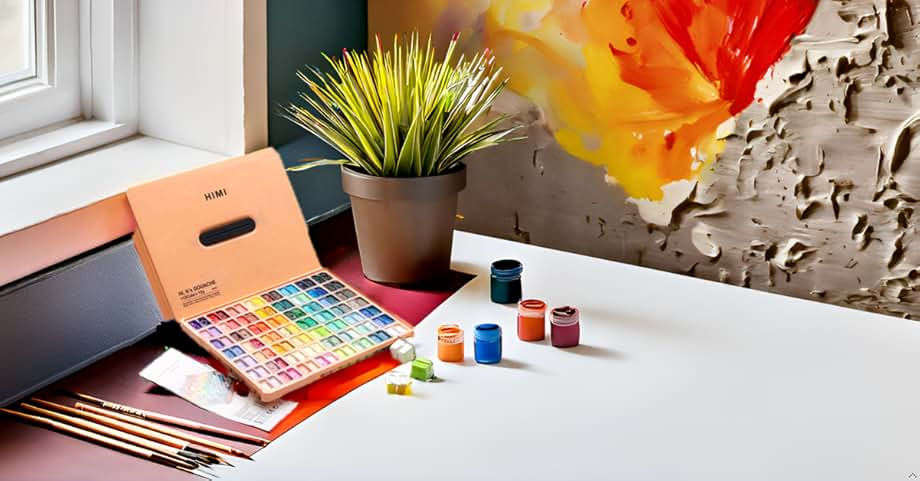
HIMI Gouache Paints SetHIMI Gouache Paints Set: Amazon

Have you been looking for genuine leads to get quality, unique art supplies in Kenya? Look no further as there are now many local market and online platforms offering a variety of options to boost your creativity. In this article, we compare some of the most popular Kenyan e-commerce sites including Jumia, Kilimall, Jiji, Textbook Center, and Bristles Arts. We look at delivery options, user-friendliness, pricing, payment methods, and the risk of scams.


Jumia Kenya: A Reliable Art Haven

Jumia offer a wide range of drawing and painting materials including quality acrylic paints, paintbrushes, sketchbooks, and canvases, among others. Despite sourcing from a wide range of independent suppliers, their delivery is fast, often within 2-5 days. I live outside Nairobi and they’ve mostly delivered my orders in less than 48 hours.


They offer multiple payment options. They have options for cash on delivery, mobile money like M-Pesa, and credit card options, which is super convenient. Their pricing is competitive; sometimes you can take advantage of their frequent discounts and offers. But you need to be timely on this. Some users complain of occasional stock issues, but that’s attributed to demand. Anyway, they clarify when items are out of stock so you don’t spend your money on non-deliverable items.


There is no risk of scams. They refund your money within a week if your complaint is genuine and covered by their return/refund policies.


Personally, I love how easy it is to use their site, their variety of local and international brands, and customer support.


Kilimall Kenya: Budget-Friendly but Basic

Kilimall is another excellent option for both quality and budget-conscious artists. You can find all basic art supplies including colored pencils, paper, and affordable paint sets, pretty much like Jumia and they also deliver within 3-5 days. The slight delay may be attributed to use of a third party for delivery, G4S Security. Prices differ slightly than Jumia’s, but for a basket of products, it can be difficult to establish which one is cheaper.


They are cheaper than Jumia in deliver fees but items change hands from the independent suppliers, Kilimall, and G4S. This could explain why some online reviews mention delays or items arriving damaged. These case are significantly rare and the best part is that no scams. You can always seek refund but you’d need to follow a strict return policy.


Jiji Kenya: Local Deals with Caution

Jiji is another great platform if you are looking for unique but locally sourced art materials from individual sellers. You need to do a background research about the seller though. Due to cases of scams and other risks associated with having to meet seller in person, the site cautions users about paying before delivery. They do not take responsibility for what happens between the buyer and seller.


I have made successful deals on the site but I can say that until the deal is sealed, you should always remain cautious. Most of the users are trustworthy though but for a site that does not control how users interact, caution is never a choice at Jiji. You can get the best deals, cheap and quality products, better than anywhere else in the country if you are keen enough.


Text Book Centre

I have shopped at Text Book Centre multiple times, for art material and books, and I can attest that it’s a shopping experiences worth spending your time on. You can visit either or both their online and physical shops. They are strategically located in Nairobi CBD and other outlets in major shopping malls.


I’ve never tried their online shop yet, it offers the opportunity to search for their products online before deciding to pay a visit to their outlets. It can be a wise move to save your shopping time.


Text Book Centre deal in quality pencils, paints, and canvases with reliable delivery across the country. They also offer easy online payment options. Prices are generally good though comparatively higher but their products offer guaranteed quality and the risk of loss is minimal. Besides, you get the chance to select products directly from their outlets. These explain why they have such excellent reviews although their high level of professionalism contributes a lot.


Bristles Arts

Bristles Arts focus on premium supplies like watercolor paper and artist-grade brushes. They are just as professional as Textbook Center but they are specific to art products and offer free shipping in Nairobi. Although relatively pricier, the quality of their products is top-notch. Most importantly, they offer expert advice.


My Verdict

I consider Bristles Arts to be the ultimate choice for professional artists who are focused on taking their career to great heights. Jumia strike the best balance for Kenyan artists as it’s affordable and convenient, with the opportunity for new and upcoming artists to get access to new material and tools. Kilimall is mostly like Jumia with mostly similar offerings. Jiji are good for budget buys and local finds, but you will have to watch out for risks.


What’s your experience?

Updated: Jul 14


ree

It all started with a flicker, a dance of light and shadow that hinted at something extraordinary. In the dimly lit parlors of the 19th century, people gathered around curious devices like the zoetrope. These early machines spun sequences of images in rapid succession, creating the illusion that static pictures could move. It was a simple magic, but it hinted at something more—a dream that one day we might capture life itself.


Then, in 1891: kinetoscope—a peep-show machine that allowed a single viewer to watch a short film. Around the same time, across the ocean in France, two brothers were working on something even more revolutionary. Cinématographe was a device that didn’t just record motion but projected it. And with that, cinema was born. The first audience was stunned. The two brothers' short films, like the famous "Arrival of a Train at La Ciotat Station,". It was as if reality had been captured and brought to life before their eyes. People shouted, laughed, and cheered. The magic of movies had arrived.


The magic of cinema spread like wildfire. Flickering images were lighting up screens all over the world, though they were silent, relying on expressive gestures, exaggerated emotions, and live orchestras to tell their stories. This was the era of the silent film, where stars like Charlie Chaplin captivated audiences with their physical comedy and poignant tales. Chaplin's "The Tramp," with his bowler hat and cane, became a symbol of the silent era—universally beloved, speaking directly to the heart without ever uttering a word. The world laughed with him, cried with him, and saw their life struggles and hopes reflected in his gestures.


Just as audiences had grown accustomed to the world of silent films, a new sensation shook the industry. Al Jolson, a young singer, stepped up to a microphone in "The Jazz Singer," and the world listened in awe as he spoke and sang. The era of the talkies had begun. Now the magic of cinema had a voice. The silent era faded like a dream, and a new reality took its place.


Just like sound revolutionized the industry, color so too did color. Early efforts to add hues involved painting each frame mannually. Technicolor emerged later as a vibrant and reliable process.

In the early day, people went to the cinemas to escape reality, and to dream, and to experience stories bigger than life itself. Movies were becoming an integral part of their life. They were more like a mirror. A fantasy with a shared experience, and people came together for distinct reasons in darkened theaters with a moving being the common factor.


In the latter days of the 20th century, the digital revolution transformed all aspects of filmmaking. Computer-generated imagery emerged. They became the new frontier. Filmmakers could now create entire unimaginable worlds and creatures. This thrilled audiences. Their imaginations were sparked by the new endless possibilities in an imaginary world.


When the internet emerged, it changed everything. People were no longer confined to theaters. They could now stream films directly from any location. That’s where we are today.


We can only imagine where artificial intelligence will take us in a few days to come.

bottom of page